Subject 1: Speed Limits & Adverse Weather Protocols
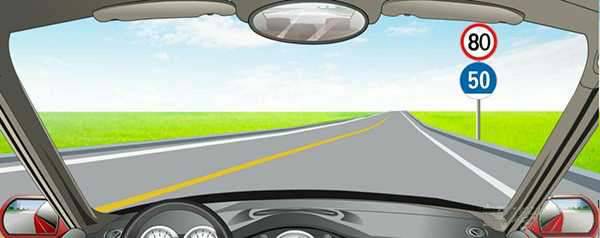
道路限速标准与恶劣天气通行规则The maximum speed on this stretch of road is 50 km/h.
在这段路的最高时速为每小时50公里。
Question Navigator
Showing Q 1–50 of 240
Statutory Quick-Reference Index: Top 15 Speed Limits & Adverse Weather Protocols Questions & Legal Citations▼ Expand Reference
Q1. The maximum speed on this stretch of road is 50 km/h.
Ans: BA blue sign with white text shows a minimum speed limit, while a red-circled white sign shows a maximum speed limit.
Q2. In this situation, you may speed up to cross the crosswalk.
Ans: BWhen pedestrians are crossing at a crosswalk, you must stop and yield, then proceed only after they have passed.
Q3. On an urban road without a center line, a motor vehicle's maximum speed must not exceed 50 km/h.
Ans: BWithout a center line the limit is 30 km/h in cities and 40 km/h on highways; with a center line it is 50 and 70 km/h.
Q4. Is the following action correct?
Ans: BWhen towing, speed must not exceed 30 km/h, the following distance must be more than 150 meters, and the vehicle must travel in the rightmost lane.
Q5. When making a U-turn, turning, or driving down a steep slope, a motor vehicle's maximum speed must not exceed 40 km/h.
Ans: BThe speed limit for U-turns, turns, and steep downhill driving is 30 km/h.
Q6. At this position in the intersection, you may speed up to get through it.
Ans: BStop on red, go on green, and slow to a stop when yellow appears.
Q7. In sandstorm, hail, rain, fog, icy, or similar weather conditions, a motor vehicle should reduce its speed.
Ans: AIn driving, safety always comes first.
Q8. When turning right at an intersection, a motor vehicle should turn on the right signal in advance, and, unrestricted by traffic lights or speed limits, pass through quickly to prevent blocking the intersection.
Ans: BTurns must be made safely, and speed must not be excessive.
Q9. When driving through a flooded road, you should speed up.
Ans: BConditions on a flooded road are unknown, so you must not speed up.
Q10. On a highway without a center line, a motor vehicle's maximum speed must not exceed 70 km/h.
Ans: BWithout a center line the limit is 30 km/h in cities and 40 km/h on highways; with a center line it is 50 and 70 km/h.
Q11. On an urban road without a marked center line, a motor vehicle must not exceed 50 km/h.
Ans: BWithout a center line the limit is 30 km/h in cities and 40 km/h on highways; with a center line it is 50 and 70 km/h.
Q12. For a small passenger car on an expressway, the minimum speed is 90 km/h.
Ans: BOn an expressway, the minimum speed is not below 60 km/h and the maximum is not above 120 km/h.
Q13. In this situation, you should lightly press the brake pedal to slow down.
Ans: APay attention to traffic signs and obey traffic rules while driving.
Q14. In this situation, you should speed up and cut in ahead of the red car when changing lanes.
Ans: BA lane change must not interfere with other vehicles driving normally.
Q15. When driving on this type of road, you should reduce speed and travel in the middle of the road.
Ans: AOn a road without a center line, motor vehicles drive in the middle, while non-motor vehicles and pedestrians use the sides.