Subject 1: Expressway Driving, Ramps & Chevron Markings
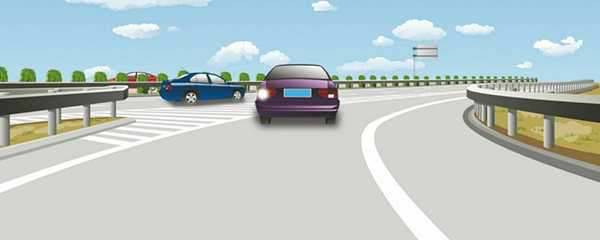
高速公路行驶规则、匝道与导流线规范This passenger car's way of entering the expressway travel lane is correct.
这辆小型载客汽车进入高速公路行车道的行为是正确的。
Question Navigator
Showing Q 1–50 of 128
Statutory Quick-Reference Index: Top 15 Expressway Driving, Ramps & Chevron Markings Questions & Legal Citations▼ Expand Reference
Q1. This passenger car's way of entering the expressway travel lane is correct.
Ans: BWhen entering an expressway, a vehicle must follow the ground guide lines.
Q2. When a motor vehicle breaks down on an expressway, a warning triangle should be placed 50 to 100 meters behind it, on the side traffic is coming from.
Ans: BThe warning triangle should be placed more than 150 meters back on an expressway; 50-150 meters applies to ordinary roads.
Q3. When a vehicle breaks down and cannot move, a warning triangle should first be placed 50-150 meters behind it to prevent rear-end collisions.
Ans: BThe correct placement is 50-100 meters on an ordinary road and more than 150 meters on an expressway.
Q4. When a motor vehicle breaks down on the road and cannot move, a warning triangle should be placed within 50 meters behind it.
Ans: BFirst move occupants out of the vehicle to safety, turn on hazard lights, place the warning triangle 50-100 meters behind, then call for help.
Q5. You may enter the expressway travel lane directly from this position.
Ans: BEntering an expressway must follow the ground guide markings.
Q6. Driving on an expressway for a long stretch straddling the lane dividing line occupies two lanes at once, making it hard for vehicles behind to pass, and easily causes accidents.
Ans: AOccupying two lanes at once affects the normal driving of vehicles behind.
Q7. When a vehicle breaks down and cannot move, is the following action correct?
Ans: BWhen a vehicle breaks down on an expressway, the warning triangle should be placed more than 150 meters behind it.
Q8. If a motor vehicle misses its exit on an expressway, and there is confirmed to be no traffic behind, it may reverse back to the exit and leave the expressway.
Ans: BOnce you miss an expressway exit, you must not reverse; you can only leave at the next exit.
Q9. When a motor vehicle breaks down on an expressway, occupants should be moved quickly to the right shoulder or emergency lane, and help should be called immediately.
Ans: ARemember: move the vehicle aside, get people out, set up the warning sign, then call for help.
Q10. This passenger car's method of leaving the expressway travel lane is correct.
Ans: ATo leave an expressway, turn on the right signal early, enter the deceleration lane at the white dashed line, slow down, then exit.
Q11. When a vehicle breaks down on an expressway, turning on the hazard lights and placing a warning triangle is meant to ask other vehicles for help.
Ans: BThese actions are meant to warn other vehicles, not to ask for help.
Q12. You may leave the expressway by entering the ramp directly from this position.
Ans: BA solid line must not be crossed; a dashed line may be crossed.
Q13. When a vehicle breaks down on an expressway and cannot move, is the driver's attempt to fix the problem, as shown, correct?
Ans: BThe correct procedure is: turn on hazard lights, move the vehicle aside, get people out, place a warning sign, then call for help.
Q14. When a motor vehicle breaks down on an expressway and needs to stop to fix the problem, if it can be moved into the emergency lane, the hazard lights do not need to be turned on.
Ans: BAs soon as a vehicle breaks down, the hazard lights must be turned on immediately.
Q15. When a motor vehicle involved in a traffic accident on an expressway cannot be driven normally, it should be towed away using a rescue vehicle or wrecker.
Ans: AAfter a highway accident, unauthorized towing by ordinary vehicles is banned; only official rescue and wrecker vehicles may tow it away.